A short-form video hook is not a trick. It is a promise.
In the first few seconds, the right viewer should understand what the video is about, why it matters, and why they should keep watching.
That matters even more for indie founders, niche-site owners, and small SaaS teams. You do not need millions of random views. You need attention from people who may visit your site, join your list, try your product, or remember your work later.
The goal is not to make people stop scrolling at any cost. The goal is to make a clear promise, show believable proof, and deliver something useful fast.
That is the 5-Second Proof Test.
A Hook Is More Than a Clever First Line
Many hook guides lean on mystery: You will not believe what happened next. That can create a click. But if the video does not deliver quickly, viewers leave. They may also remember the creator as someone who overpromises.
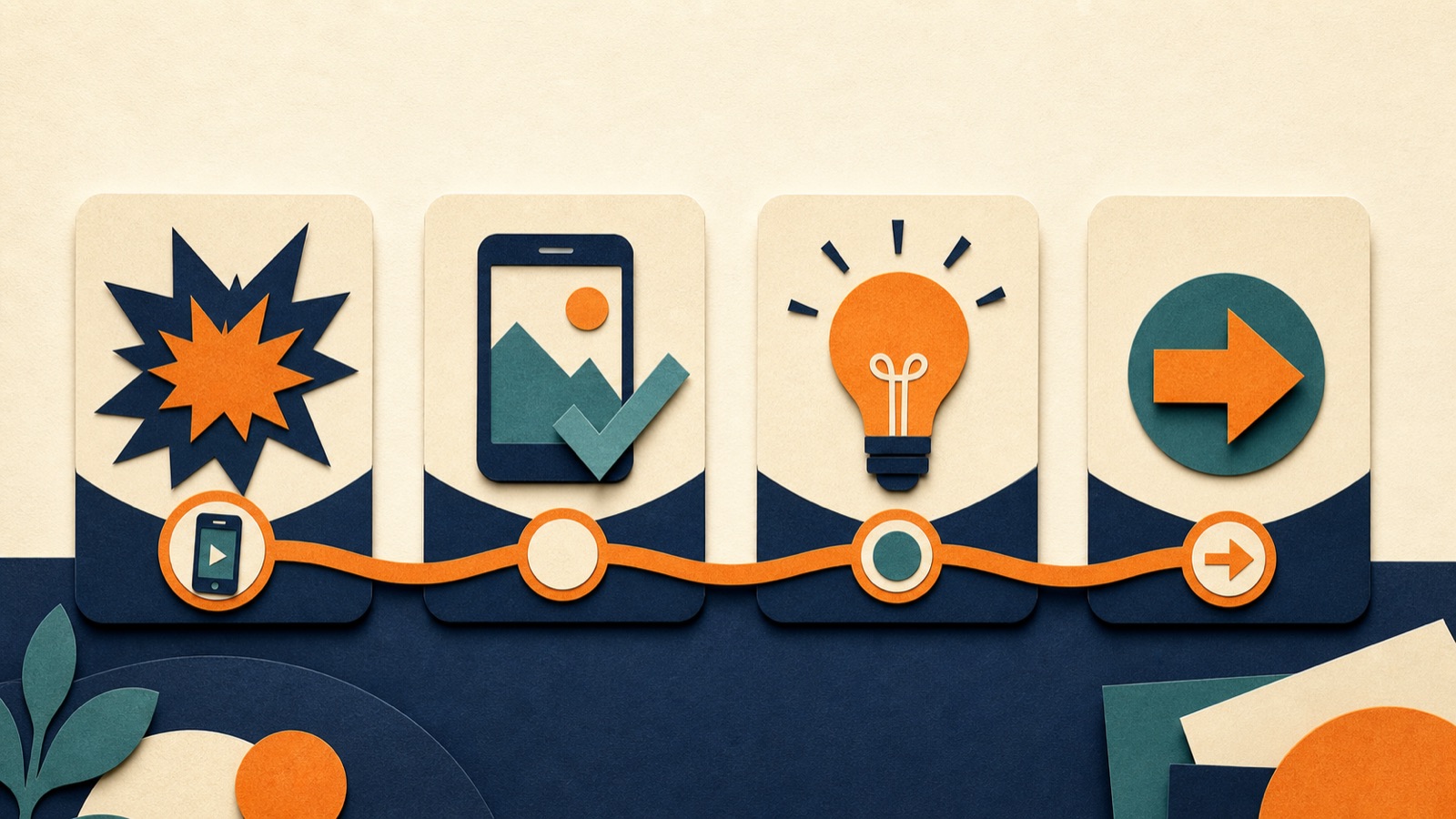
For practical founder content, use a better structure:
| Step | What it means |
|---|---|
| Promise | What will the viewer learn, see, or avoid? |
| Proof | What makes that promise believable in the first frame? |
| Payoff | What useful answer do they get quickly? |
| Path | What should they do next if they want more? |
Here is a weak hook: This one growth hack changed everything.
Here is a stronger one: This free tool collected 28,000 emails before it had a paid plan. Here is the first page that made people sign up.
The second version is specific. It gives a result, suggests proof, and attracts people who care about early-stage growth.
Start With the Business Goal, Not the Video Idea
Before writing a hook, decide what the video should accomplish. It might bring the right people to a new site, test whether a problem earns attention, build trust before a launch, turn a case study into email subscribers, or show a product in use.
The same topic needs a different hook depending on the job.
Imagine that you found a neglected search opportunity:
- For awareness: “I found a search problem with thousands of searches and almost no useful answers.”
- For email sign-ups: “I turned this search gap into a one-page resource. The template is free.”
- For product validation: “Before building a tool, I made this one page to see whether people wanted the answer.”
The topic is the same. The promise changes because the goal changes.
Use the 5-Second Proof Test
Before filming, watch the first five seconds without sound. Then ask:
- Can a new viewer tell what this is about?
- Is there one clear visual focus?
- Does the first frame support the claim?
- Is the text easy to read on a phone?
- Would the right viewer know why this matters?
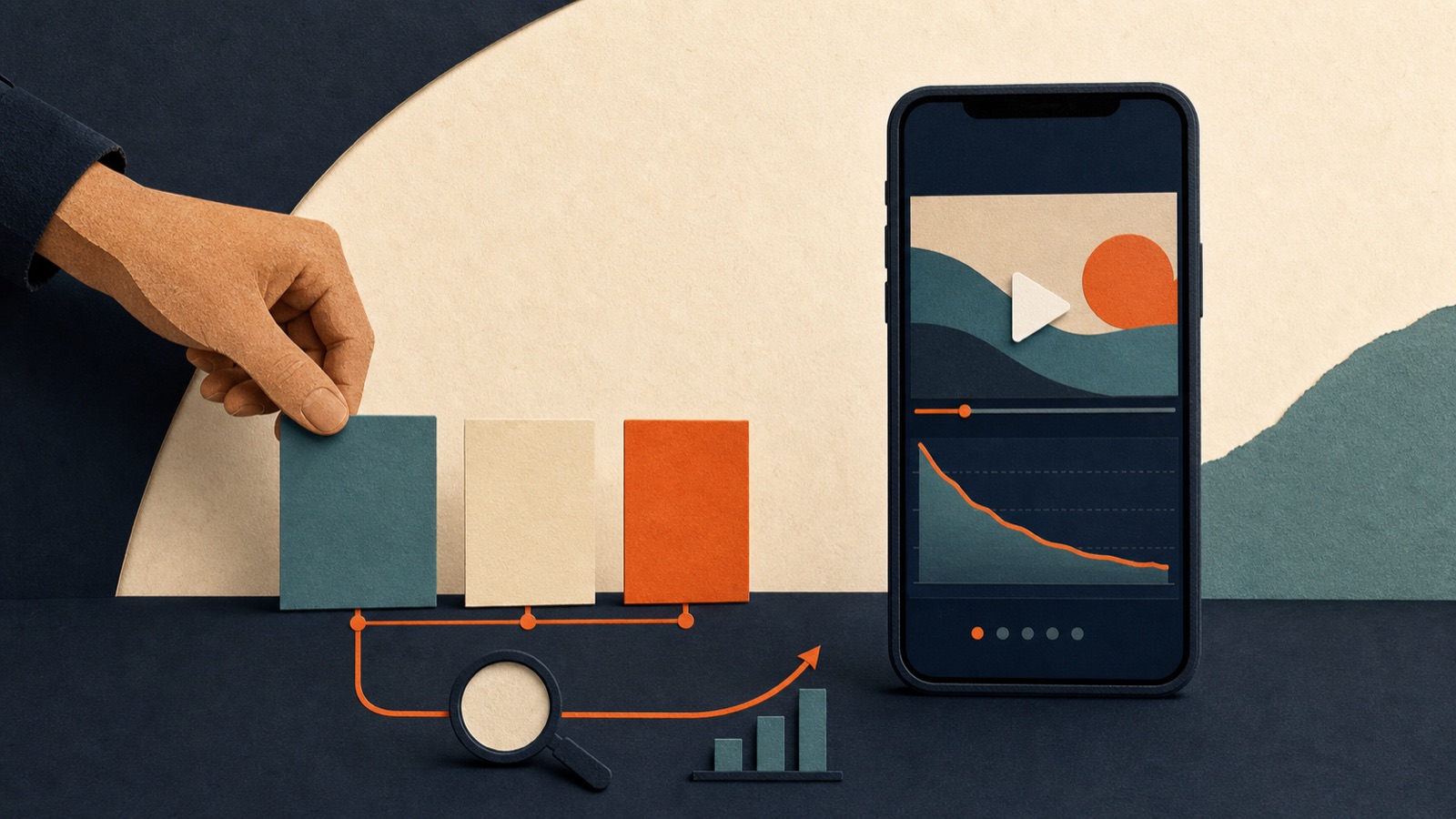
For founder content, proof often works better than a dramatic reaction. Useful proof can be a real search result, a simple traffic chart, a product recording, a before-and-after page, a user quote, a spreadsheet with one surprising number, or a public example with a visible result.
You do not need to show every detail immediately. You only need enough evidence to make the promise feel real.
7 Hook Styles That Work for Founder Content
These are not magic templates. They are starting points to test.
1. The Evidence-First Hook
“This tiny free tool built a 28,000-person email list before it had a business model.”
Show the relevant number, page, or screenshot. This works well for case studies, growth lessons, SEO discoveries, and product launches because viewers see that there is something real behind the claim.
2. The Search Gap Hook
“People keep searching for this problem, but the top results still do not solve it.”
Then show the query, search results, or pattern you noticed. This connects a real user problem to an opportunity.
3. The Small Experiment Hook
“I tested this landing-page idea before writing a line of product code.”
Show the page, result, and what you learned. The viewer can imagine trying the same low-risk experiment.
4. The Contrarian-with-Proof Hook
“You do not always need to build the tool first. This content page got the first demand signal.”
A useful disagreement can create interest. Evidence keeps it credible. Avoid vague lines such as “Everything you know is wrong.”
5. The Mistake Hook
“This page had traffic but almost no sign-ups. The problem was not the headline.”
Then show the change that improved the page. This is useful for landing pages, ads, SEO, onboarding, and pricing.
6. The Behind-the-Decision Hook
“I had two ways to validate this idea. One cost $2,000. The other took one afternoon.”
Bring viewers into a real choice, then explain the trade-off and why you chose one path.
7. The Before-and-After Hook
“This article got impressions but no clicks. One change made its search result easier to understand.”
The “after” should be honest. Do not imply that one small change guarantees a big result.
Do Not Hide the Payoff for Too Long
A common mistake is creating a strong opening, then spending twenty seconds setting up the story. Your hook makes a promise. Pay off part of that promise early.
For a 30- to 60-second video, use this simple structure:
- 0–5 seconds: Promise and proof
- 5–15 seconds: Context or problem
- 15–40 seconds: Method, lesson, or result
- Final seconds: One clear next step
You can still hold back details. But the viewer should get a useful answer before the end.
Make Three Versions of Every Important Idea
Do not assume your first hook is the best one. For one topic, write three angles:
| Angle | Example |
|---|---|
| Result | “This free tool built a 28,000-person email list.” |
| Problem | “Most free tools get traffic but never collect an audience.” |
| Method | “Here is how one simple tool turned repeat use into email sign-ups.” |
Each angle speaks to a different motivation. The result attracts people who want evidence. The problem attracts people who recognize the pain. The method attracts people ready to learn.
Use them as separate creative versions, then compare how the right audience responds.

Measure More Than Views
Views are useful, but they are not the whole story. A video with fewer views can be more valuable if it brings the right people to your site or product.
- Did people choose to watch rather than swipe away?
- Where do viewers leave the video?
- Which moments are replayed, shared, or saved?
- Did people visit your profile or website?
- Did the video lead to email sign-ups, demos, trials, or useful comments?
- Did viewers ask questions that reveal a real problem?
On YouTube Shorts, look at “How many chose to view,” engaged views, and the retention curve—not only total views. YouTube also lets creators compare retention with videos of a similar length. Read YouTube’s audience-retention guide.
Do not use a universal rule such as “70% retention means success.” Compare performance with your own recent content on the same platform, aimed at a similar audience.

Adapt the Distribution, Not Just the File
The same video can work differently across platforms. TikTok publicly describes recommendations as a mix of user interactions, video information such as captions, sounds, and hashtags, plus other contextual signals. It does not publish one fixed formula. Read TikTok’s explanation of recommendations.
Instagram can recommend eligible public-account content to people who do not follow you through Reels, Explore, Feed Recommendations, and Search. Eligibility is useful, but it is not a promise of reach. Read Instagram’s recommendation-eligibility guide.
Keep the central promise consistent, then adjust the caption, cover frame, context, and call to action for each platform. Make every important video understandable without perfect audio: use accurate captions, clear text contrast, and leave room for platform controls.
A Simple Hook Worksheet
| Audience | Who is this for? |
|---|---|
| Problem | What are they trying to do or avoid? |
| Promise | What specific outcome will they get from this video? |
| Proof | What can they see in the first five seconds? |
| First useful answer | What will they learn before the halfway point? |
| Path | What is the natural next step: read the case study, try the template, join the list, or follow the series? |
If you cannot answer these clearly, the hook is probably still too broad.
A Test You Can Run This Week
Choose one useful insight from your work. It could be a search gap, an SEO mistake, a landing-page change, a small product experiment, or a customer question.
- Write three hook angles: result, problem, and method.
- Pick the one with the clearest proof.
- Film a short version that gives the first useful answer early.
- Publish it with one relevant next step.
- Review retention, comments, profile visits, and downstream actions.
- Keep the winning structure in a simple hook library.
Over time, that library becomes more valuable than a list of generic opening lines. You will learn what your audience wants to know, what evidence they trust, and which ideas are worth turning into deeper content or products.
The best hook is not the loudest one. It is the one that earns attention from the right person—and gives them a good reason to stay.